Technology and test data
Phase separation, corrosion, loss of power. We designed our fuel to solve these problems of existing alcohol blends, and checked the results in tests.
Known problems with alcohol blended gasoline overseas
These are common problems reported with low-alcohol blends such as E10, E15 and E20 in the US, China, India, Brazil and other countries. They are not faults of one product. They are issues any alcohol blend must be designed to handle.
| Problem | Main cause | What can happen in use |
|---|---|---|
| Phase separation | Water gets in, and alcohol and gasoline do not mix well enough | The fuel splits into layers, so the engine gets an uneven fuel |
| Metal corrosion | Alcohol that has taken in water, water itself, and oxidation by-products | Tanks, pipes, pumps and injectors may corrode |
| Hard cold starts | Alcohol needs more heat to evaporate; vapor pressure not matched to the season | Cars start less easily in winter |
| Lower fuel economy | Less energy per liter than gasoline | More fuel is needed for the same distance |
| Rubber and seal wear | Alcohol acts as a solvent and can make some materials swell | Hoses and seals change and may leak |
| Limits in supply and transport | Alcohol takes in water, and existing pipelines were not built for it | Separate transport and storage are needed |
The U.S. Department of Energy says E10 can be used in all gasoline cars, and E15 in light-duty cars from model year 2001 on. Source: U.S. DOE, Ethanol Blends
How our technology differs
We do not add a little alcohol. We rebuild the fuel.
Figures for typical low-alcohol blends are common industry levels. Our figures are MESOLEAN test results.
The three-layer design of ESOLEAN
Built around 50% alcohol, with three layers that support each other.
- Base blendThe alcohol and hydrocarbon parts are made to mix evenly, so the fuel stays uniform even with a high alcohol share.
- Boiling point and vapor pressureLight and heavy parts are balanced to match vapor pressure to the season, for easy cold starts and no vapor lock in hot weather.
- Functional additive systemRaises the water level the fuel can take, and prevents corrosion, oxidation, poor burning and metal-ion damage.
This is what sets it apart from simply adding alcohol to ready-made gasoline.
Results from outside test bodies
These results are outside-institute data for MESOLEAN (methanol type).
- Outside bodyTested or issued by a university or official body
- Our own testChecked in our own tests
- To be postedOfficial results to be added
Exhaust reduction
Pusan National University, Institute of Mechanical Technology; vs. gasoline; total over the first 120 seconds after start
Exhaust levels
Shanghai Chemical Industry Research Institute; gasoline → MESOLEAN
| Item | Gasoline | MESOLEAN |
|---|---|---|
| HC | 220.23 ppm | 99.33 ppm |
| CO | 3.84 % | 0.07 % |
| NOx | 65.49 ppm | 21.71 ppm |
Results by test
| Test | Tested by | Result | Data |
|---|---|---|---|
| Quality test | Korea Petroleum Quality & Distribution Authority, Petroleum Technology R&D Center (2019.03) | Octane number 99 or higher (test certificate issued) | Outside body |
| Quality test | Sinopec Fushun Research Institute | Passed 23 national standard items | Outside body |
| Acceleration, power | Shanghai institute / Pusan National University | Same level as gasoline | Outside body |
| Metal, rubber corrosion | Pusan National University, Institute of Mechanical Technology | Same level as gasoline | Outside body |
| Engine start | Pusan National University, Institute of Mechanical Technology | Engine speed, injection time and excess-air ratio were the same as gasoline | Outside body |
| Noise, vibration | Pusan National University, Institute of Mechanical Technology | Same as gasoline when idling | Outside body |
| Vehicle exhaust | Liaoyang test station (GB18285) | CO 4.00 (limit 12.00), HC+NOx 0.60 (limit 4.5): pass | Outside body |
| ESOLEAN | Our company | Phase separation, corrosion and octane checked in our own tests. Official results (phase separation, corrosion, octane, emissions, fuel use) to be posted later | Our own test To be posted |
Test certificates and reports
Original documents issued by outside bodies.
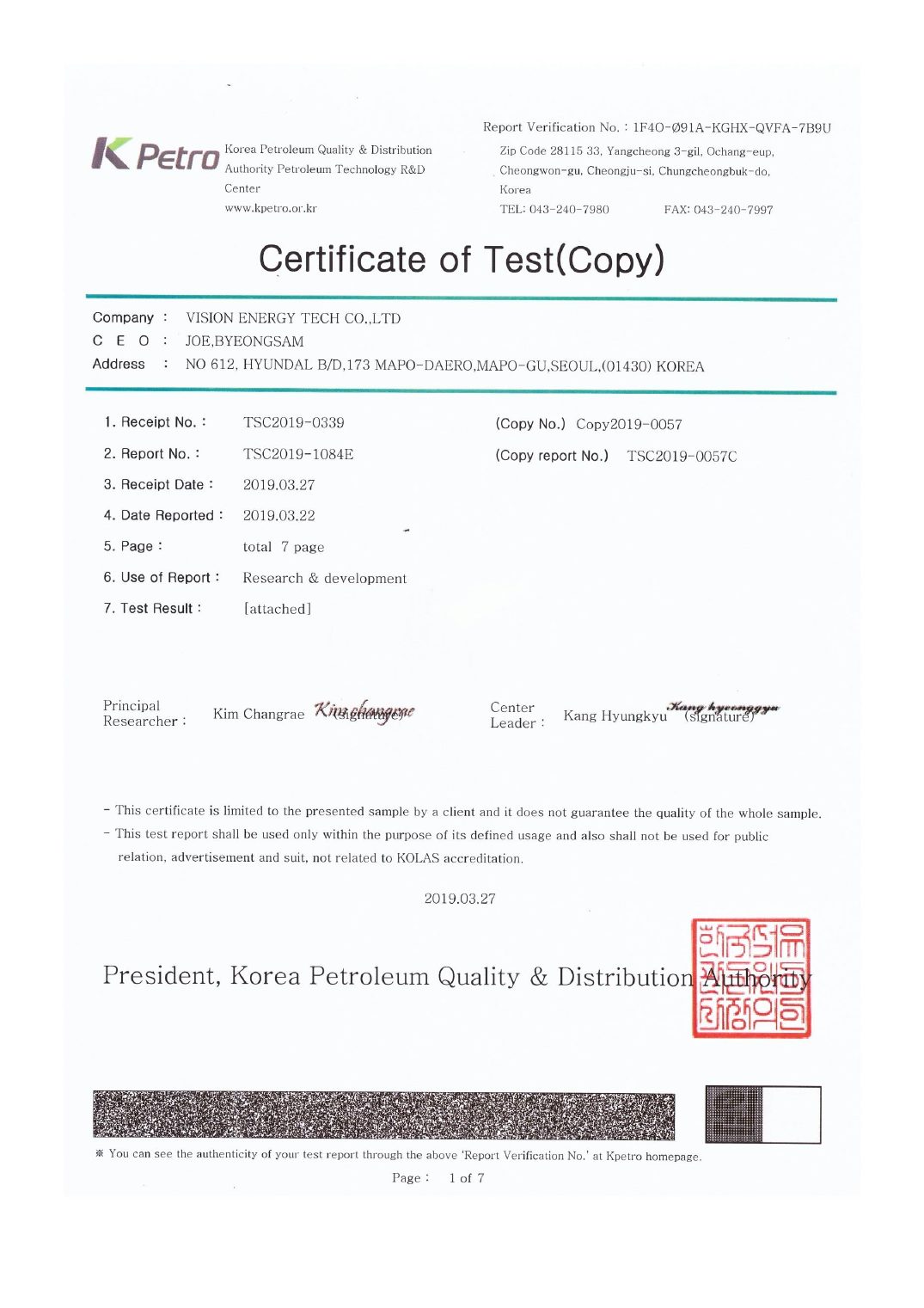
K-Petro Certificate of Test (cover)Report No. TSC2019-1084E · 2019.03 · page 1 of 7 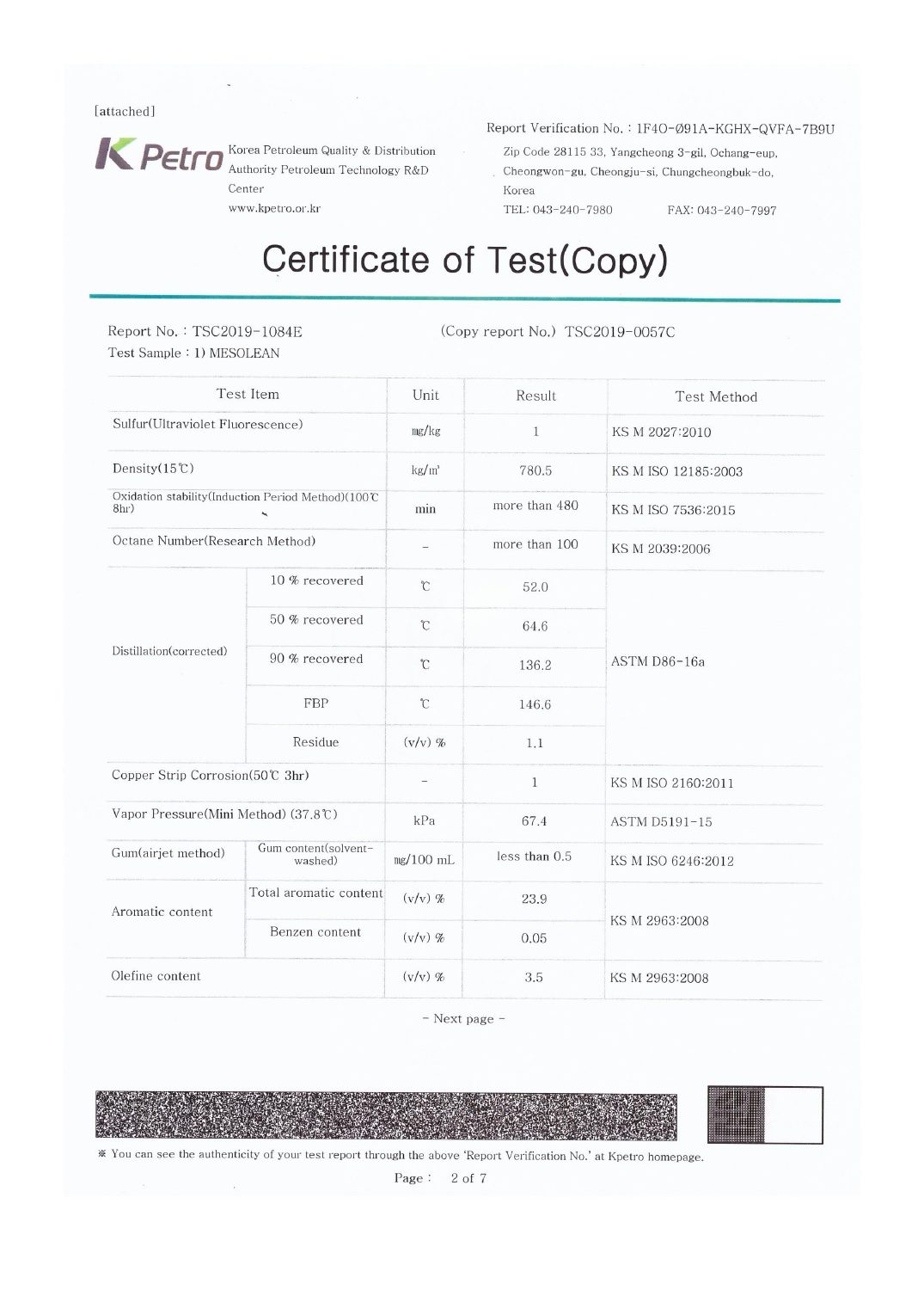
K-Petro Certificate of Test (MESOLEAN)Octane number (RON) more than 100 · page 2 of 7 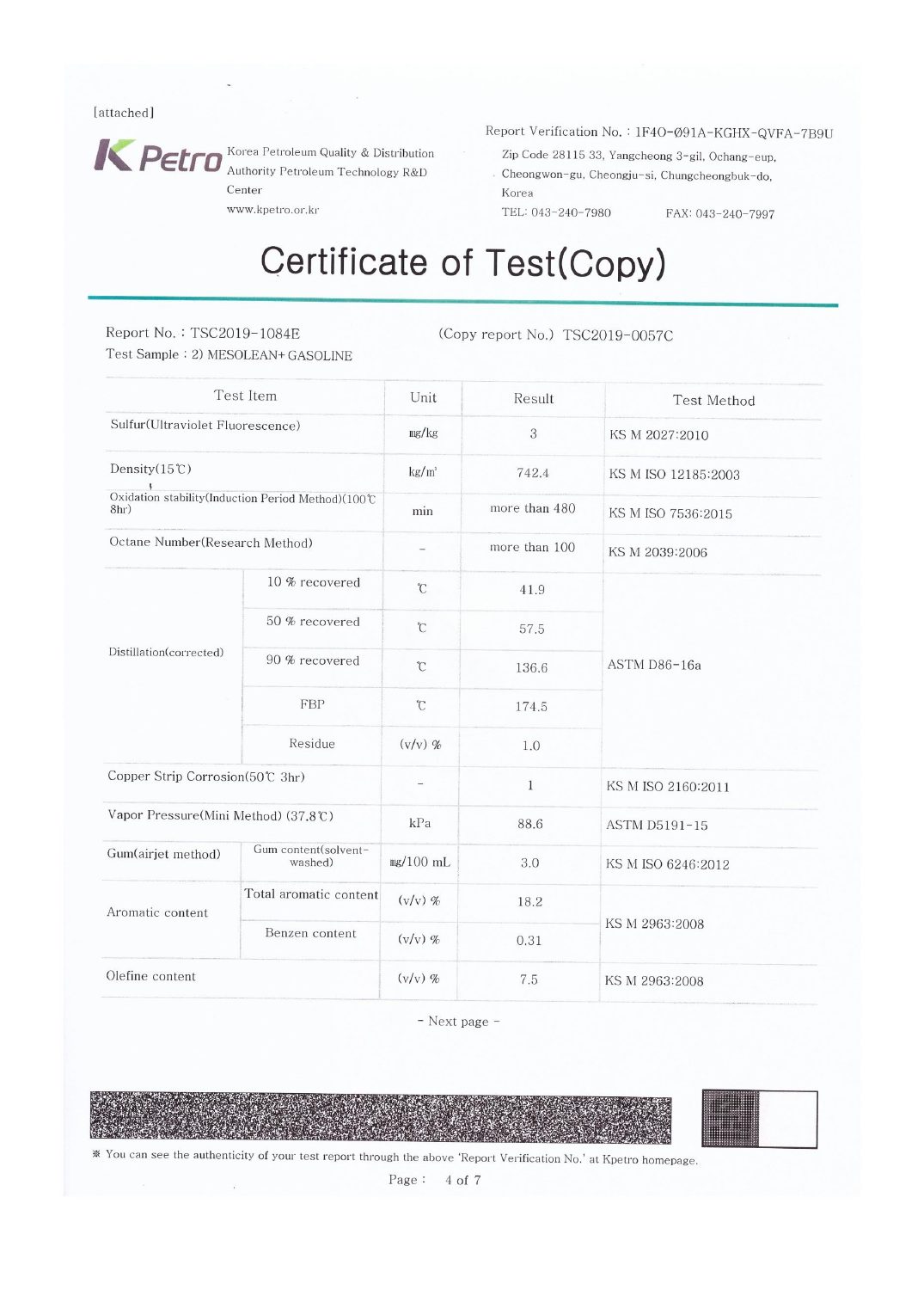
K-Petro Certificate of Test (MESOLEAN + gasoline)Page 4 of 7 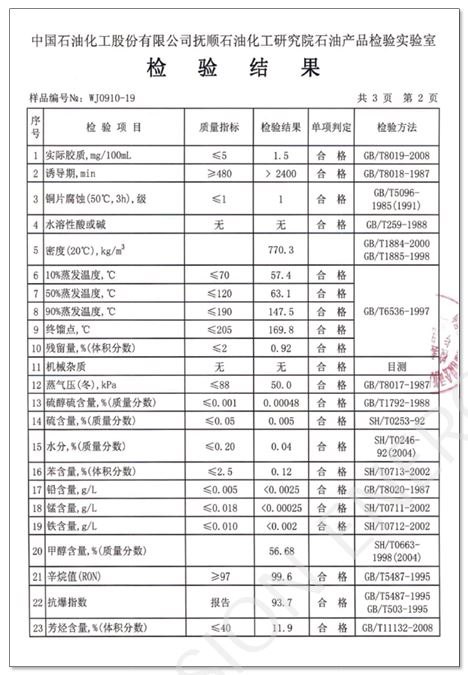
Sinopec Fushun Research Institute test resultSample WJ0910-19 · passed 23 items 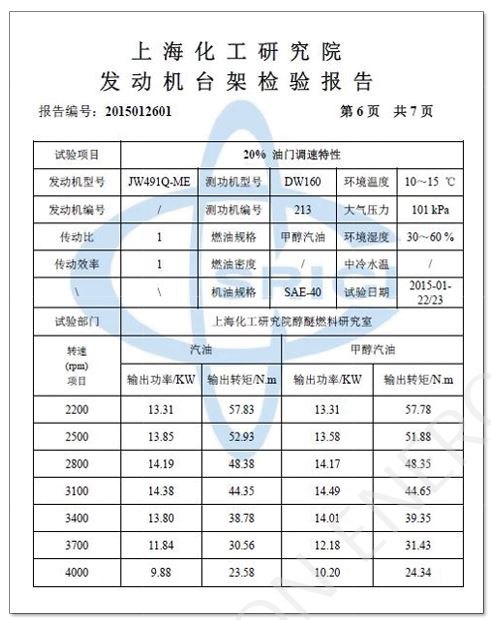
Shanghai institute engine bench test (power)Report 2015012601 · page 6 of 7 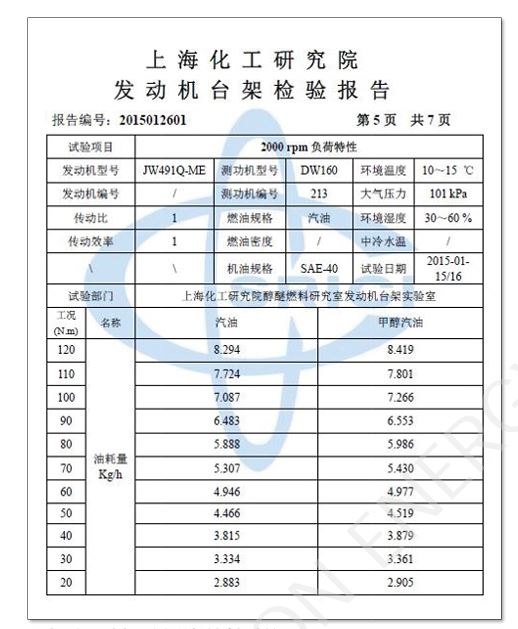
Shanghai institute engine bench test (fuel use)Report 2015012601 · page 5 of 7 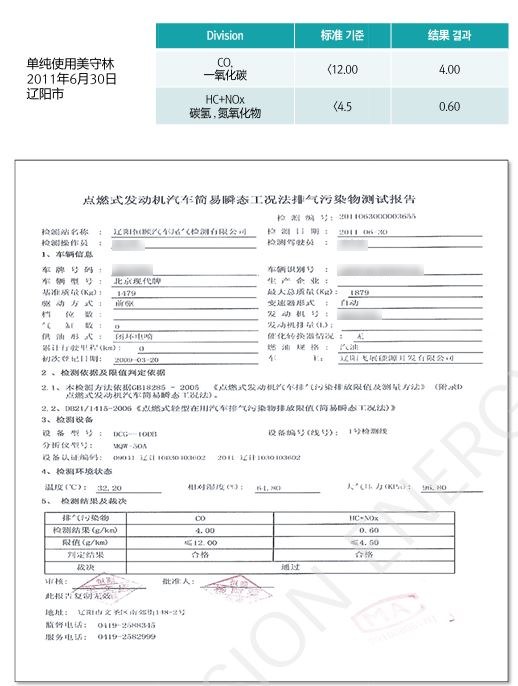
Liaoyang vehicle exhaust test report2011.06.30 · GB18285-2005 · vehicle and personal details blurred
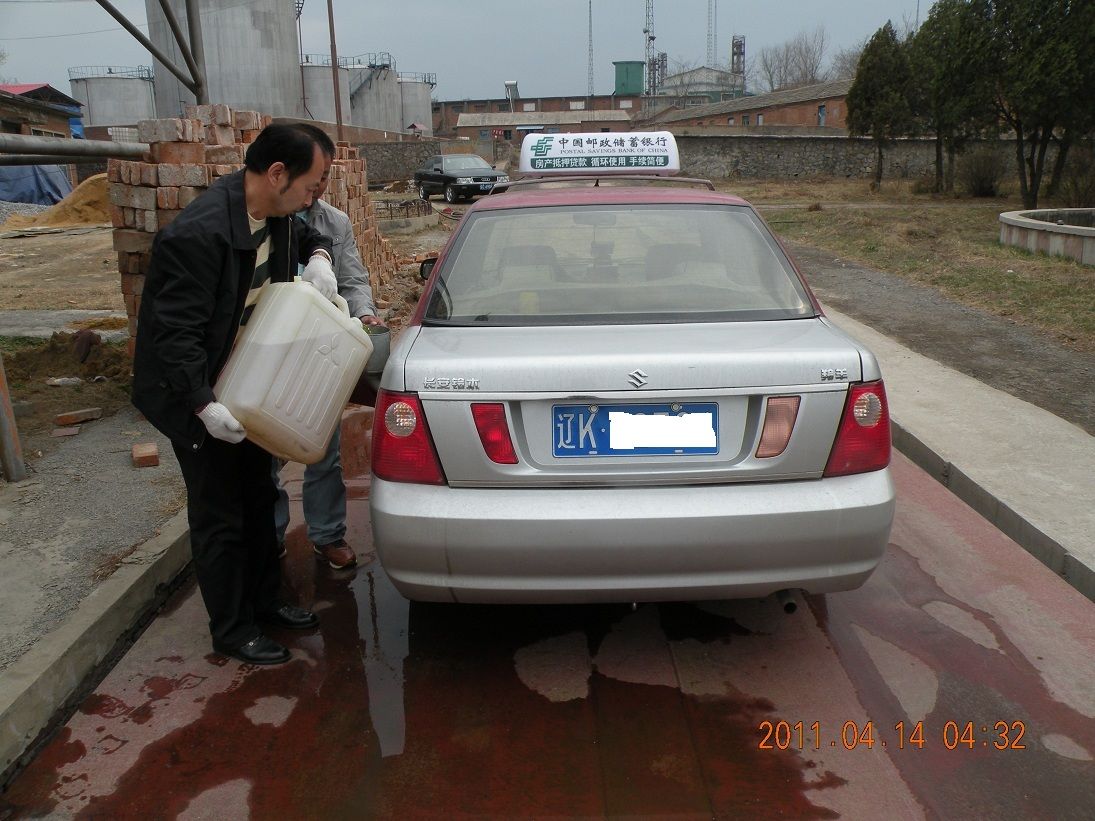
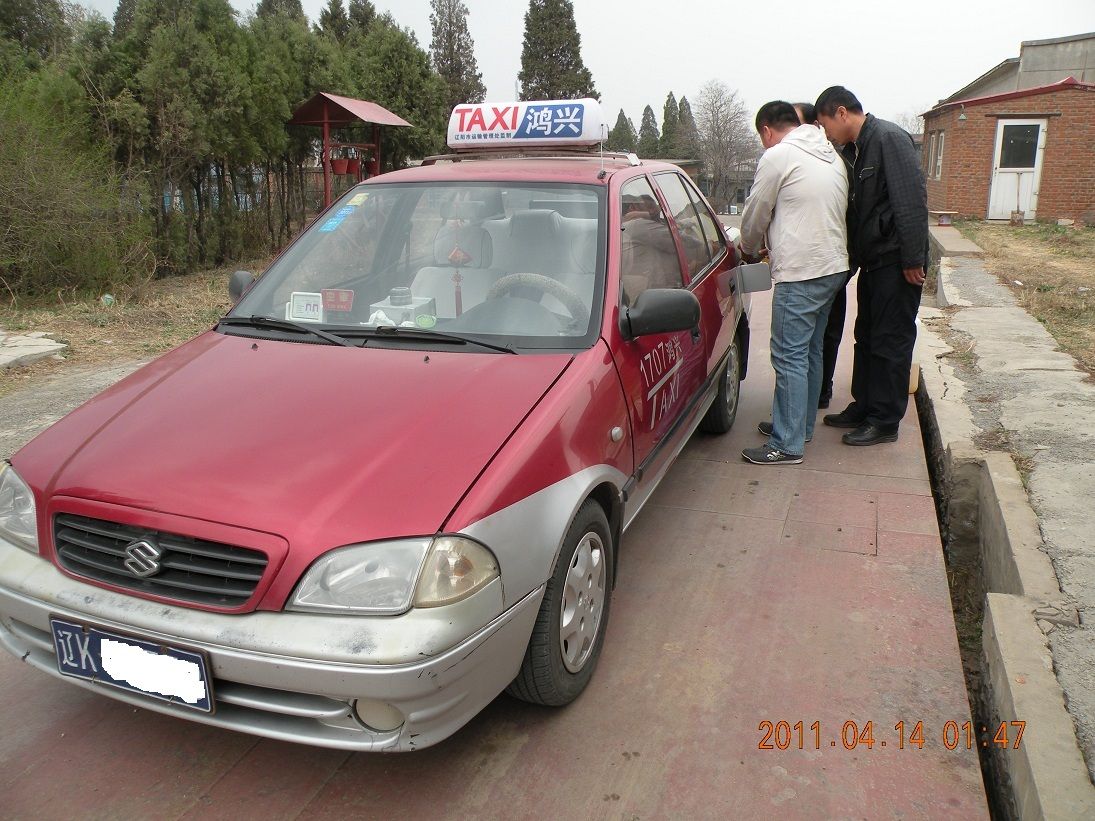
Field use: taxis in Liaoyang, China
This is a record of methanol-type fuel used in local taxis in Liaoyang, Liaoning Province, China, from 2008 to 2012. It shows that the fuel can be used on real roads, not only in the lab.
Environment
A simple comparison of the CO₂ moles made per 1 mole of fuel burned, from the burning formula.
| Fuel | CO₂ (mol) |
|---|---|
| Isooctane C₈H₁₈ (gasoline) | 8 |
| Ethanol | 2 |
| Methanol | 1 |
It leaves out energy content, blend ratio and full life-cycle (well-to-wheel) assessment.
Cost
Competitive with the international wholesale gasoline price (before tax, USD/L). Exact figures change with the market and exchange rates, so they are discussed case by case.
Energy security
Helps reduce dependence on imported crude oil and widens energy choices.
Talk to us about using our fuel
Send us an email about licensing, a joint venture, or test data. We will reply.
- Company
- KOREA VISION ENERTECH CO.,LTD
- kang@mesolean.net
- Website
- WWW.ESOLEAN.COM